Assoc.Prof. Dr. Nguyen Gia Cau
The Editor-in-Chief of the Vietnamese Former Educators Journal.
Source: Vietnamese Former Educators Journal – 15th April 2024
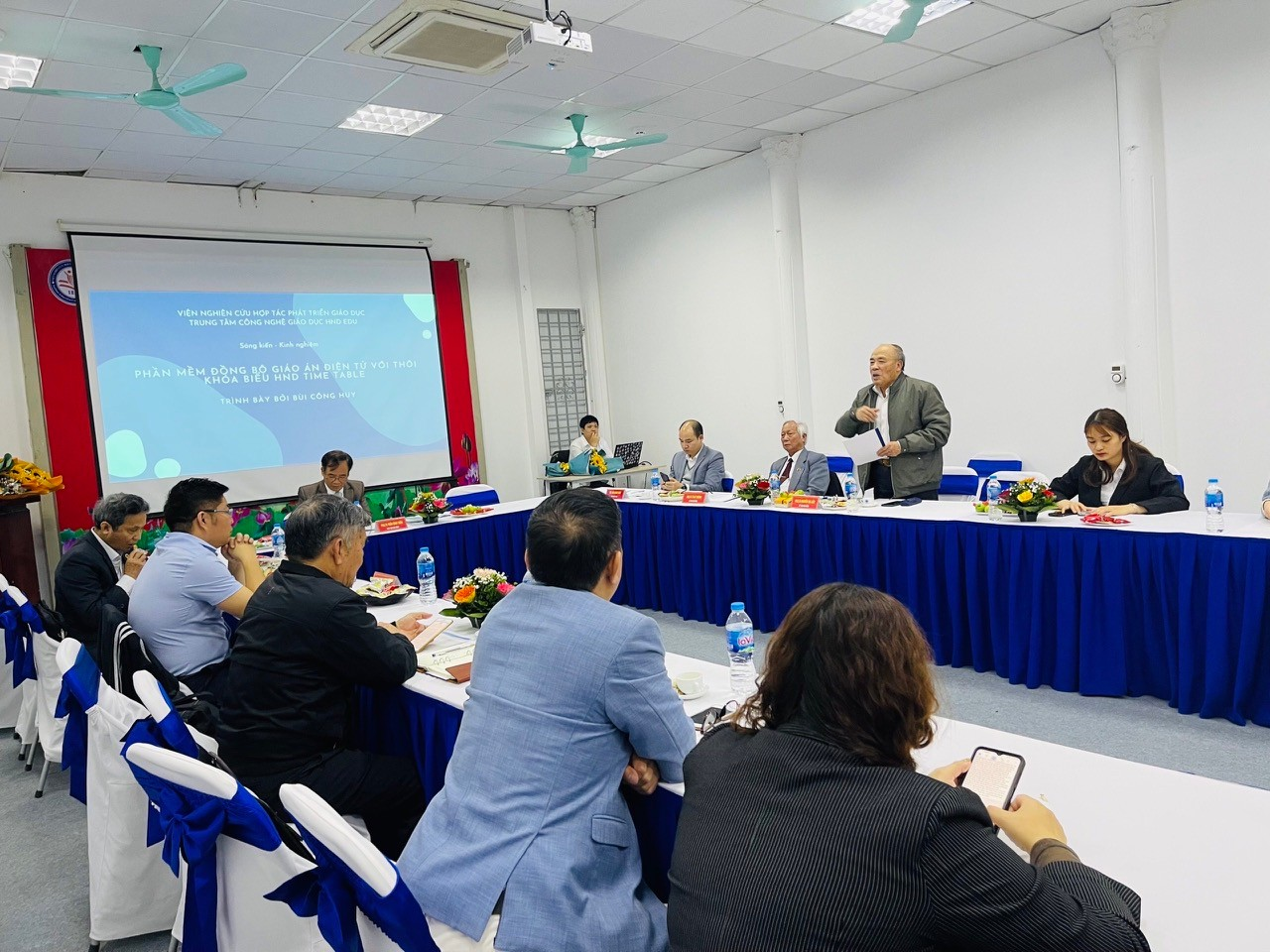
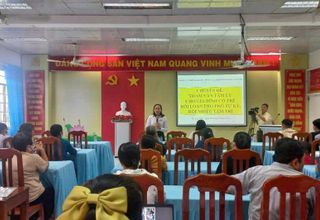
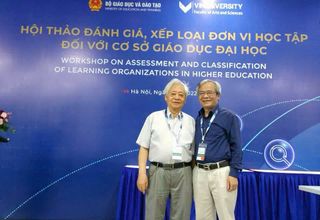
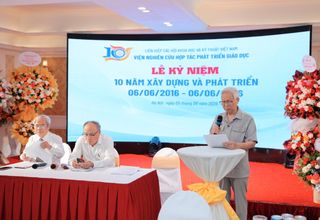
Assoc.Prof. Dr. Nguyen Gia Cau at the scientific seminar.
From a practical viewpoint
In recent decades, along with the strong development of science and technology, the science and education has made remarkable progress, effectively serving the renovation, development of education and training – a career carrying a significant policy of each nation. The educational and scientific research activities in educational & training institutions (especially within the universities, colleges and research institutes) are highly valued by the managers, with relatively satisfactory investment under possible conditions. The number of educational scientific researchers is increasing and becoming more professional; the young researchers are increasingly proving their capabilities and positions. Every year, there is a large number of research topics on educational science (school level, ministerial level, key ministerial level) have been accepted, and the number of theses defended to obtain a master's degree and dissertations defended to obtain a doctoral degree also achieves very remarkable figures. Approaching some of the mentioned educational scientific research works from various angles, we would like to have some comments as follows:
In terms of content, most of the topics are closely linked to the practice of teaching and education in the process of innovation and development. Meaning that, the urgent requirements of educational practice and school life that urged the authors of that topic to determine the suitable topic and the direction of research works. After surveying the current situation and conducting theoretical research, the authors sought the solutions, measures, and ways to innovate and improve the quality of teaching and education. This is to meet the increasing requirements of the developed society and the period of industrialization and modernization in the country. Since they are the research topics in educational science, at different levels, the scientific experiment to affirm the feasibility of pedagogical measures and solutions, proving the accuracy of scientific hypotheses is highly valued and occupies a significant portion of the research work. Through the experimental results, it has given the readers the confidence in the research results, the ability to apply them in educational and teaching practice and avoid falling into speculative consequences, empty theories during the research process, or the research results are put back in a drawer after being accepted.
It is worth noting that, despite the theoretical nature of the topic, the implementation of the research's plan and the outcomes of these topics are closely linked to school life, describing (scientifically) and reflecting the realities of education. This is accurate because the experience shows that, without educational practice, it is less likely to succeed in the study of educational science. This is because without fully grasping the richness, vividness, complexity of phenomena, sophisticated relationships, developments and directions of development of things, phenomena, etc., it is difficult to implement the requirements of methodological approaches and research system methods effectively. Lenin said, “Practice is higher than perception (reasoning) because it has the advantage not only of universality, but also of immediate realism.”
The educational reality referred to here are real events, real individuals, specific situations, resolved or unresolved issues, explorations, innovative experiences, and scientific experiments, etc. in all aspects, in all educational activities at the schools, within the families, in union work, in the society, in directing, managing and researching agencies. But the reality is always green, lively, and an inexhaustible treasure of scientific research topics, including education science. Many times in the process of theoretical research, encountering problems without answers, the researchers have to look into the reality, look to the advanced examples, and new factors to overcome difficulties. By doing so, they can find the solutions and achieve success.
The research topics and works are mostly accepted, evaluated and graded well, which is confirmed by the council to be an useful reference for the teachers and those who are interested in the issue. However, the transfer and application of those research results into the school life and teaching and education practices are generally limited. Many research works and results after being evaluated, graded, accepted and then fell into disused.
Recently, most postgraduate training institutions and research project managing agencies have regulated the conditions necessary for the research works and the results to be evaluated and ranked with the highest score, stating that those that have at least one scientific paper (published in a recognized scientific journal) related to the topic's content. The research work must be published and disseminated in specialized scientific journals. In our opinion, this is reasonable and should be encouraged more because it is a way to bring the research results to the educational practice and also a way to measure the value of pedagogical conclusions.
To some basic theoretical premise
The scientific research is the process of perceiving the objective reality according to certain methods. In the scientific research, the documents and events are the foundation and being extremely important, but the thinking, analysis, synthesis, reasoning, ideas, questions, judgments, thoughts, conclusions, recommendations, etc. drawn from the event is essential to determine the success of the research process. Of course, the research process must also follow the law of perception "From vivid visualization to abstract thinking and then back to reality". The objective reality is a constantly moving and developing reality, therefore, in order to be truly objective, accurate and comprehensive, the researchers must thoroughly uncover the process, changes, dialectical nature, and development of the subject under the study as fully as possible. All notes, collected about the reality, the object of the study, related to the research object must be complete and take into account all relationships, all aspects of the nature and typical meaning of the truth as it takes place, but not modified, cropped, squeezed accordingly to illustrate and prove a given intention before the study.
The education science, social science (the core of education and psychology), is directly related to the people (a very sophisticated, complex and volatile subject, a subject of "the synthesis of social relationships"). It explores the essence and closely interrelated, diverse yet law-bound relationships in the process of human formation as a personality. Based on this, the educators design the objectives, content, methods, and organizational forms of the educational process scientifically and appropriately to achieve the optimal results under specific social conditions. The formation and development of the people's and children's personality are influenced by the social factors and circumstances (environment), education (school, family, society, etc.) and heredity (biological factors), so the personality education is the most important and most difficult of education.
In the process of researching the mentioned subjects (in reality) and tasks, the education science as well as the science and technology have been increasingly developed and have formed specialized sciences such as general education, teaching theory, educational theory (narrow meaning), educational management theory, educational history, subject education (subject teaching methods), education for the children with disabilities, comparative education. Furthermore, the education science also integrates with various other disciplines and forms interdisciplinary fields such as educational economics, educational sociology, psycholinguistics, and so on.
The educational science uses common cognitive methods (like the dialectical materialism method, etc.), general scientific research methods (historical approaches, systematic approaches, etc), and also has its own research methods of pedagogical observation, educational experience review methods, etc.
Identifying the topics for the dissertation in particular and the educational scientific topics in general is the first important stage of a research process and plan to be implemented. Because it is the first stage, there are many opinions saying that this is the beginning of difficulties, "A good beginning makes a good ending". Theoretically, the topic is understood as the object of research (or scientific description) set out for the researcher. They must conduct the surveys, learn the current situation (to avoid speculation in research), describe and experiment to draw general conclusions that constitute the newly discovered scientific content of the work. Therefore, the research topic must always ensure two basic requirements: scientific urgency (profound scientific meaning) and practical application (practical significance). The research topic may be proposed by the researcher himself, may also be suggested by the instructor or by an educational institution or school, due to the fact of education and the request to solve, however, it is not allowed to repeat or overlap with the content that has been or is being studied. While many researchers may study the same issue within the scope of reality, their approaches must differ. This means that the topic, the reality, must be viewed and explored through a new framework of thought. Only in this way, the research results are capable of bringing new and useful contributions to the theoretical treasure of the scientific major and enriching the educational practice.
Some notes when determining and naming the topic
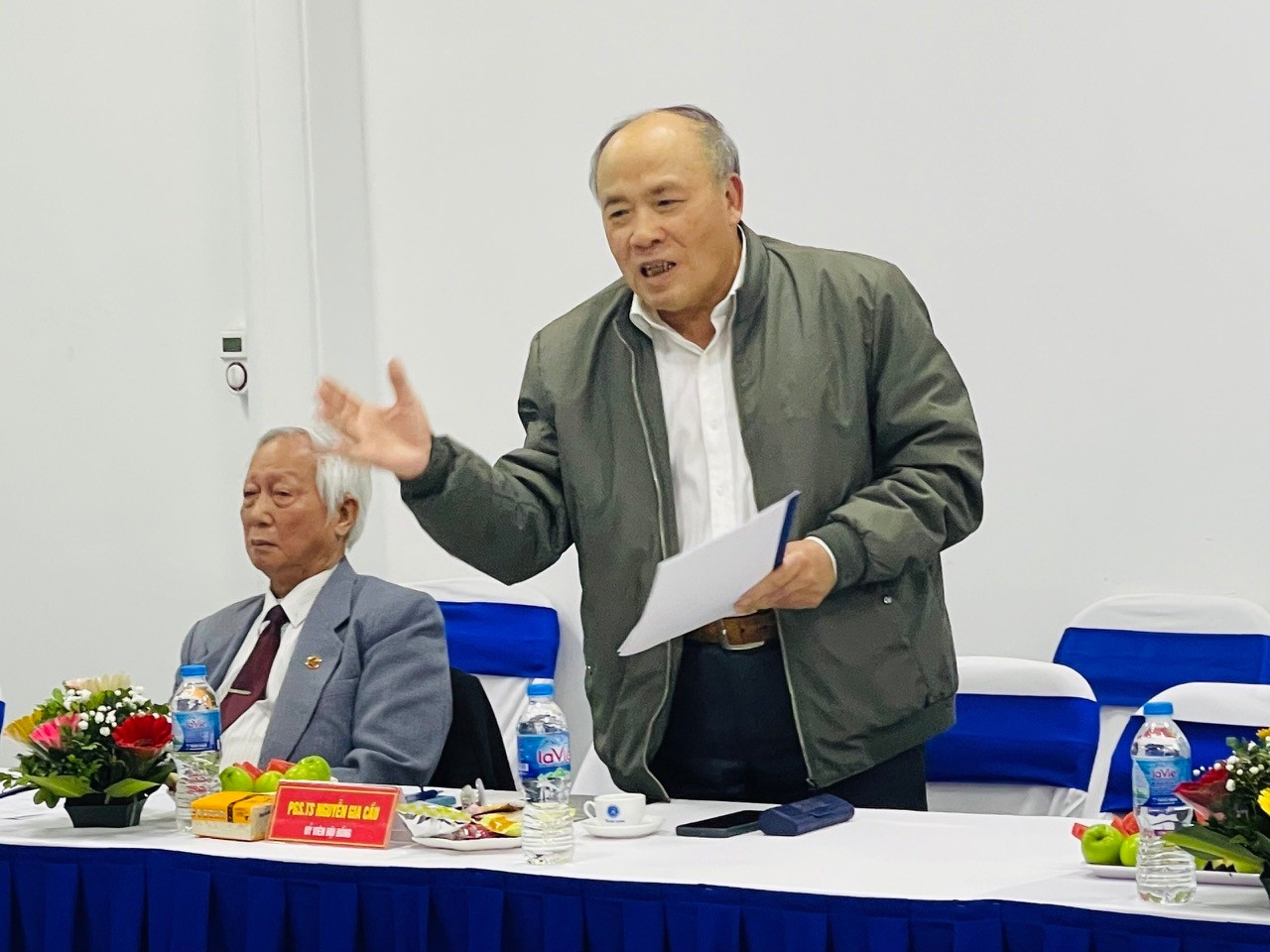
Associate Professor Dr. Nguyen Gia Cau discusses research methods
The essence of the research topic, in short, is a scientific question. This question is posed from the contradictions in theoretical research, theoretical activities or in real life and in objective reality. For the educational science topics, this question comes from the issues of educational activities or educational scientific research activities.
Stating the name of the field of educational and teaching activities or the name of the problem does not define the research topic. The name itself does not contain scientific content nor do they convey anything specifically. The name is only a description and reflection of reality in a simple, formal way, just a shell of things and phenomena. For example: "The educational activities outside of class for the junior high school students ", or "The current moral quality issues of the general school students", or "Teaching literature according to the 9th-grade Literature textbook", etc. are not educational scientific research topics. Only when the question is raised, outlining the suspicion of something, can it be considered a defined research topic. For example: What types of after-school educational activities can help improve the quality of moral education for the students? What after-school educational activities have little effect? Why? How to overcome it? The more the question is attached to the content of educational science, the more scientific the research topic becomes, and the more defined it is.
In our opinion, when choosing a topic, it should come from the issues raised by the educational and teaching practices. The term "practice" here should be understood not only as the visible and audible issues encountered daily in the schools, educational institutions, and educational management agencies, but also as the reality reflected, crystallized, and molded in the books, newspapers, etc. The purpose of the educational scientific research is to serve for the development of education and training. The noble responsibility of education is to train people, to cultivate people, to form and develop the personality for the young generation, so all educational scientific research topics, even at different levels (ministerial, institute, school, grassroots level), follow the rich and diverse approaches, etc. for the sake of cultivating the people. In the educational scientific research, special attention must be paid to detecting new and truthful phenomena and events in the reality of education or discovering new laws and principles in that reality.
With the thesis topic, the scope of reality should not be too broad because if so, it can be difficult to delve deeply into addressing the objectives set and to thoroughly extract the reality accurately and comprehensively. Meaning, in order to achieve the requirements of in-depth research, the researcher should narrow the scope of the topic. With the same objective and subjective conditions, the narrower the topic, the more likely it is to go into a multi-faceted analysis, collect a lot of data; the pedagogical conclusions and the recommendations are more convincing and highly reliable.
The broad and narrow concept we refer to here only have relative meaning. There are the cases where the narrow topics (narrow scope) are difficult to conduct a research. In general, depending on specific cases and issues, it is necessary to determine the research topic to make it feasible and highly scientific.
The requirement to go deep does not conflict with the holistic viewpoint. Because it is only with a comprehensive, overall, systematic view that help to know how to choose the problems to go deeply into and have a method to deeply solve the set tasks.
For example, some postgraduate students initially choose the topic "Some measures to improve the quality of teaching Literature for the high school students" but then find out that this is a topic with a massive scope of research compared to the requirements of a master's thesis because it covers both Vietnamese Literature, Foreign Literature, including historical literature, teaching literature, practicing writing, poetry, stories, plays, both modern literature, ancient literature. After that, the topic was narrowed to "Some measures to improve the quality of teaching modern lyric poetry in 12th grade textbooks for the students in Thanh Hoa mountainous region". Thus, the topic was limited to a certain type of literature, with a specific subjects and in a certain area.
Regarding naming the topic, in our opinion, the title of the topic, in general, must ensure the following requirements: The Objects and scope of the study are clear and determined (what to answer the research question); the objectives and tasks to be achieved (what to answer the question for); research's path, how to achieve the goal (how to answer the question). In practice, it is not necessary that the name of each topic express all three questions explicitly, but usually only the first question and the second question, and the third question is hidden in the third question or the second question.
The expression (wording) of the title should not be too long, and must ensure the requirements: completeness, succinctness, conciseness of ideas, brevity, clarity of conceptual content and terminology, no cumbersome or confusing content. The arrangement of each word, phrase and punctuation mark in the title of the topic must ensure the accurate, scientific, strict and reasonable requirements. Precisely formulating the research topic is an important initial step and also a guide to help the researchers develop their research arguments correctly, focusing on meeting the research objectives set by the topic. Precisely formulating the research topic could be considered as a scientific message to help the reader understand the scientific thought of the topic in a simple but profound, not roundabout, confusing, unclear way.
In summary, for the researchers, identifying research topics (subjects) is the first and most important step of the scientific research process and plan. Identifying the right research subjects, the implementation of research will be convenient and thereby will detect and produce scientific knowledge to effectively serve the research tasks set out by the topic, and at the same time the system of theses, arguments, and arguments will also be built scientifically, strictly, appropriately, etc.
References
1. Jean Piaget: Psychology and Education, Education Publishing House, H.1999.
2. Pham Minh Hac: Education in Vietnam at the threshold of the 21st century, National Education Publishing House, H.2002.
Bui Cong Dat Translated














Ý kiến bạn đọc